Case study · RB Wheelz

Credit eligibility moved to the front of the loan funnel

RB Wheelz is RenewBuy's auto loan platform. Advisors were capturing leads, filling long forms, uploading documents, and waiting on manual multi-bank checks, only for 92 to 95% of applications to be rejected on credit score. I had one month to move the check to the start.

  • Fintech
  • Auto loans
  • Web & mobile
  • B2B2C
Cover · 21:9The RB Wheelz product cover: eligibility check and multi-bank offer screens, composed wide. This page is diagram and screen led rather than photographic, matching the material the project actually produced.

Where the money was going

Leads captured by advisors
100%
Eligibility checked manually by the DST team, across 18+ lenders
Days
Reached disbursement
6–8%

92 to 95% of applications were rejected on low credit score or ineligibility for the requested amount, after the advisor and the customer had already done the work.

Role
Sole product designer
Team
1 PM, development team
Timeline
1 month, 2025
Platform
Web and mobile
Industry
Fintech, auto lending
Scope
Product improvement
Reach
1.25 lakh+ advisors
Lenders
18+ banks and NBFCs

The problem

The platform qualified leads at the end of the process instead of the start

After capturing a lead, 92 to 95% of loan applications were rejected on credit score, and eligibility checks took days.
Lead-to-disbursement conversion sat at 6 to 8%, against high lead acquisition costs and real advisor effort per application.
Business problem

RB Wheelz launched in April 2025 and put new vehicle loans in front of 1.25 lakh+ RenewBuy advisors. Conversion never got above 6 to 8%, which does not pay for the leads or the advisor hours spent capturing them.

Why it mattered

Every lead required the operations team to check eligibility and loan amount across banks and NBFCs by hand. That is slow and expensive per lead, and it pushes the rejection to the latest, most costly moment for everyone involved.

Existing screen · 16:9The old lead capture screen: full form, personal and professional details, document upload.
The old lead capture screen. Everything here had to be completed before anyone knew whether a bank would lend.

The change in one picture

Same steps, reordered so the cheapest filter runs first

Nothing was removed from the regulatory or lending process. The credit check simply moved from the end of the sequence to the beginning, which changes who does the work and when they find out.

BeforeDays, then a 92–95% rejection
Capture leadAdvisor meets the customer
Full formLoan amount, personal and professional details
Upload documentsEverything, to the portal
DST checks by handAcross 18+ banks and NBFCs
Mostly rejectedOn credit score or eligible amount
After3 to 5 minutes to a qualified lead
Capture leadAdvisor meets the customer
PAN and credit check3 to 5 minutes, in front of the customer
QualifiedStraight to offers
Multiple bank offersAmount, rate and EMI, side by side
Customer choosesThen the full form is worth filling

Customers who fail the screening are not turned away. They complete the longer form and wait on DST approval, which is exactly the old path. The change is that they are now the exception rather than everyone.

Research

We asked the people who had already been rejected

I planned and ran interviews with rejected loan applicants and with FLS partners, and recorded the feedback. Two very different sets of reasons came back, and both needed answering.

Why customers walked away
  • Slow eligibility checks. Days of waiting after handing over documents.
  • No alternatives. One outcome, no comparison, no sense of a market.
  • High interest rates. With nothing to compare them against.
  • Low transparency. No visibility into the amount they could actually get.
Why lenders refused
  • Low credit score. Knowable in minutes, discovered in days.
  • Ineligible for the requested amount. The customer had already anchored on a number nobody had checked.

Both rejection reasons are visible from a PAN and a credit pull. That is the whole insight: the platform was collecting the expensive information first and the cheap information last.

Research artefact · 16:9Partner feedback board, or the user-story map of partner needs against customer needs. Blur or relabel anything commercially sensitive.
User stories separated what partners needed from what customers needed, which is what kept the offer screen from becoming an advisor-only tool.

How might we

Three questions, then four things worth testing

  • 01

    Identify and shortlist loan eligibility as early as possible.

  • 02

    Build trust with a customer at the moment they want a new loan.

  • 03

    Keep the customer engaged and give them the best available offer.

Hypotheses we designed against
  • Advisors and customers should see eligibility and eligible amount as early as possible, to decide faster and better informed.
  • Advisors should be able to filter and prioritise qualified leads from their own customer list and at showrooms.
  • Both should see multiple loan options and compare rate, tenure and eligibility before deciding.
  • The advantages of taking the loan through RenewBuy should be visible at the point of comparison.

The work

Three changes, each one earlier in the sequence than the last

Read as a set they do one thing: they move the moment of truth forward, from after the paperwork to before it.

01

Screen the lead with PAN and a credit check

Sits atstep 2 of 5, before any form

To capture a new lead, the advisor now verifies credit eligibility with PAN verification and a credit pull. The screening takes three to five minutes and marks the lead as qualified or not. Qualified customers move straight to offers. Everyone else completes the longer form and waits on DST approval, as before.

Why here

Both lender rejection reasons are visible from a PAN. Running that check first is the cheapest possible filter, and it costs the customer three minutes instead of three days.

Cost

A hard stop early in a sales conversation. An advisor now sometimes learns in front of the customer that this will not work, which is a harder moment than a silent rejection days later.

Screen slot 01 · 16:10Initial eligibility check through PAN.
02

Show multiple bank offers and eligible amounts upfront

Screen slot 02 · 16:10Multiple bank offers with amount, rate and EMI.
Sits atstep 4 of 5, before the form

Once a customer clears the screening, the advisor's dashboard shows multiple bank offers, each with the eligible amount, the interest rate and the monthly EMI. The advisor shares these with the customer directly, so the customer chooses the bank and the offer.

Why here

Three of the four reasons customers walked away were about comparison and transparency. Showing the market answers all three at once, and it does it before anyone fills a form.

Cost

Offers can be worse than the customer hoped, and now they see that clearly. We accepted a lower emotional high point in exchange for a decision the customer actually owns.

03

Let partners sort their existing book by credit score

Sitsbefore step 1, ahead of the funnel entirely

FLS partners already hold customer lists from insurance and past loans. They can now shortlist those profiles by current credit eligibility and proactively offer top-up loans, balance transfers or refinancing, turning a dormant portfolio into qualified, low-cost leads.

Why here

The cheapest qualified lead is one the advisor already has a relationship with. This is the same screening logic applied to the book instead of the street.

Cost

Sorting a customer list by credit score is a sensitive capability. It needed clear scoping around what an advisor may see and act on, and it is the part of this project I would want reviewed hardest.

Screen slot 03 · 16:10Existing customer portfolio analyser.

Impact

What moved, by how much, and over what window

Rolled out to all FLS partners and advisors across India after UAT and advisor training, then measured over three months.

  • Lead to disbursementAdd figure6–8% → 3 monthsLeads captured that reached disbursement, all-India, post-training
  • User engagementAdd figureAdd baseline → 3 monthsAdvisor sessions on the loan flow
  • Lead conversionAdd figureAdd baseline → 3 monthsQualified leads converted to a chosen offer
  • Advisor efficiencyAdd multipleBaseline → 3 monthsLeads processed per advisor per day, and DST checks avoided
  • Time to a qualified lead3–5 minPAN and credit check, in front of the customerDays → At launchTime from lead capture to a qualified or not-qualified result
How to read these numbers

The original case study reports three outcomes qualitatively — higher lead engagement and more meaningful conversations, fewer loan rejections on poor credit, and higher daily efficiency for advisors and the DST team — without published numeric values, so the figures above are what could be sourced from it rather than a guess. Design was one of several changes in the window, including advisor training, so these should not be read as design-only.

Retrospective

Three things I would do differently

  • 01

    A one-month timeline meant no usability testing before build

    We went from research to design to handoff inside four weeks, with UAT as the only validation and it came after the build. The screening flow was simple enough to survive that. The offer comparison screen was not, and it should have had a test.

  • 02

    I designed the rejection path last and thinnest

    Customers who fail the screening now hear no in front of an advisor rather than by email days later. That is a better outcome for the business and a worse moment for the person, and it deserved more design attention than it got.

  • 03

    We shipped a credit-sorting tool without a usage policy attached

    Letting advisors rank their own book by credit eligibility is powerful and easy to misuse. The guardrails were assumed rather than specified in the handoff, and I would now write them into the spec.

Next case study

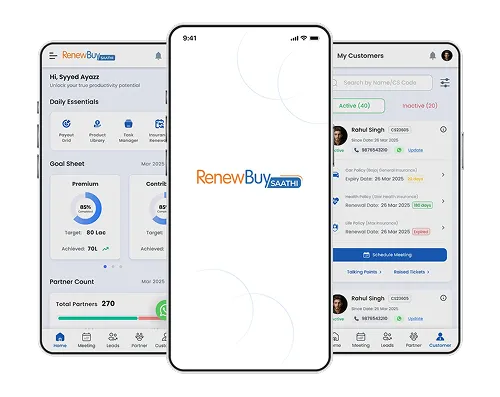
RB SAATHI logo
  • B2B2C
  • Advisor App
  • Sales Team

Productivity app that gives managers visibility into team output

Redesigned RB Saathi App for reporting managers and supervisors. Built tracking for field sales teams productivity, lead visibility, and engagement to drive sales.

44%
App engagement
58%
Lead-to-meeting rate
8.8%
Fresh-lead conversion
View case study
RB SAATHI product screenshot

Get in touch

Let's build something worth shipping.

Open to senior product design roles in fintech and insurance (B2C, B2B, and SaaS).